Dunrovin Ranch

THE Destination Ranch of Western Montana

  • About
    • Getting Here
    • The Bitterroot Valley
    • The Dunrovin Difference
    • Our Staff
      • The Miller Family
    • Our Animals
  • Activities
  • Contact/Payment
  • Webcam

Jun 20 2016

A Dunrovin Totem?

Recently I returned to my second home state, Alaska. When I lived in Alaska, I called myself a misplaced Montanan; and now that I am back in Montana, I sometime refer to myself as an away Alaskan. In truth I belong to both states. I call myself a Montanalaskan. They hold tightly to my heart and my spirit. I carry them both deep in my bones.

As a biometrician working for the Alaska Department of Fish and Game, I was able to experience Alaska as few do.  My work took me on countless field trips to nearly every mountain range, every river drainage, every small village, and the few bigger cities in the state. I spend hundreds of hours in small airplanes, helicopters, river boats, ocean going vessels, on snow machines and on foot hiking throughout the state. I know Alaska’s waters, mountains, tundras, and forests. My experiences span Alaska’s two primary seasons: winter and the Fourth of July. I have done much the same in Montana, although here my preferred mode of transportation is clearly that of riding one of my steadfast and back country savvy steeds.
P1010261

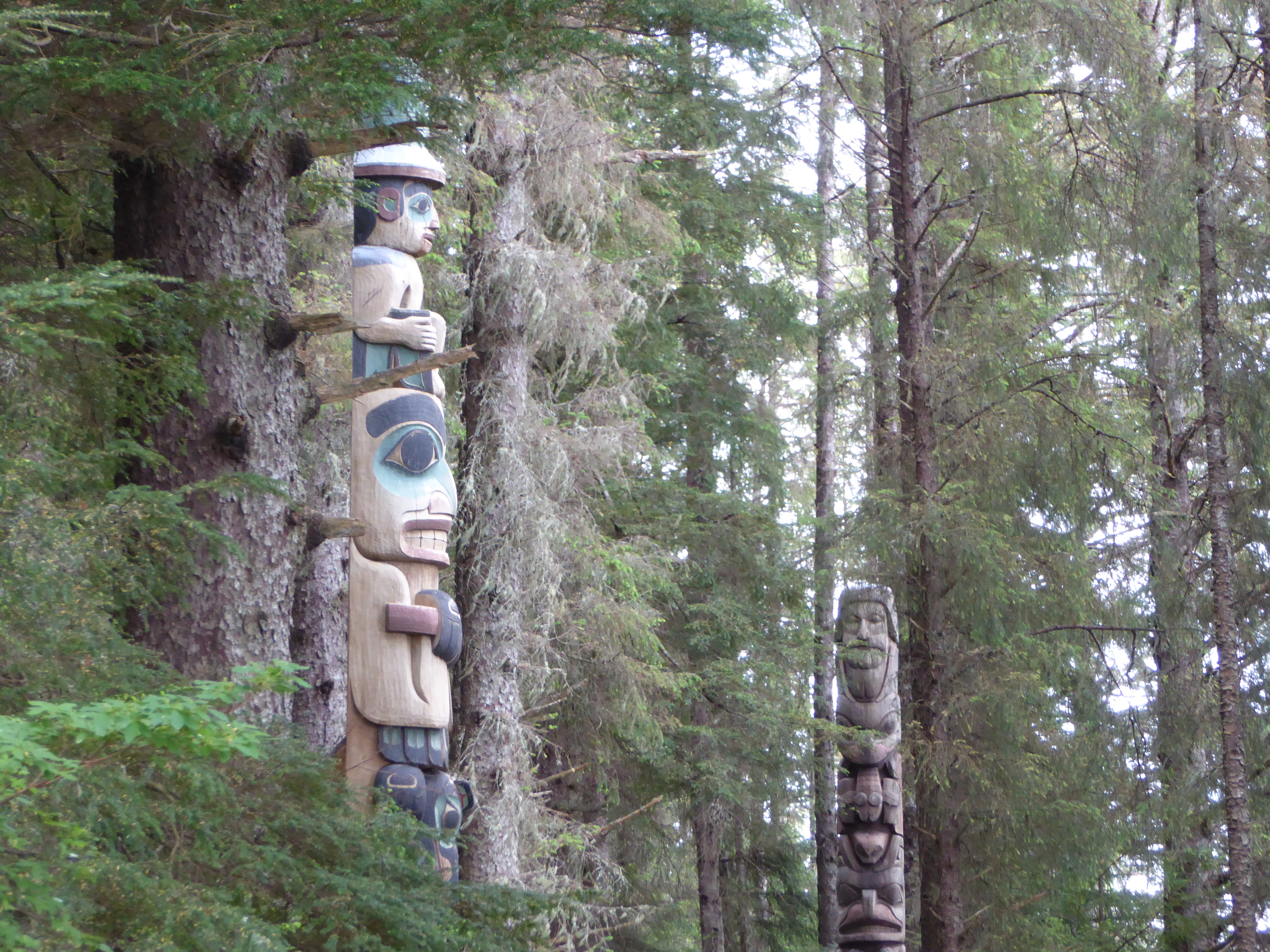
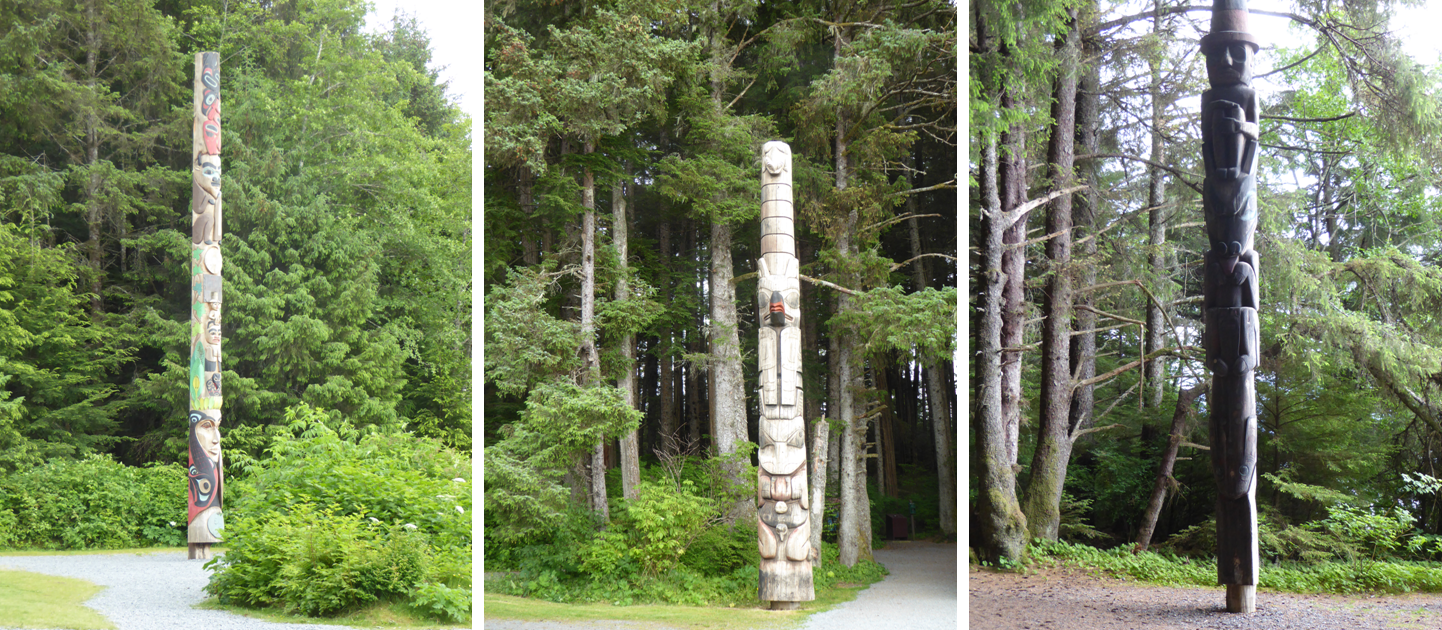
The first stop on my Alaska trip was Sitka. During a quiet walk through the coastal trail of the Sitka National Historical Park with my longtime friend, Susan, I was once again spell bound by the beauty and the significance of the Tlingit and Haida totem poles standing silently among the towering spruce trees. Totems are sacred, religious symbols created by different clans, families, or groups honoring their relationship to their worlds – their worlds filled with the animals that sustained them physically, emotionally, and spiritually. These are beautifully carved works of arts clearly and loudly proclaims the creator’s reverence for and attachment to the animals depicted. These monuments sing to me. I feel the power of the connections between the animals and the totems’ carvers. The depth of their gratitude to, and reverence for, the animals portrayed is obvious to all.
Totums1

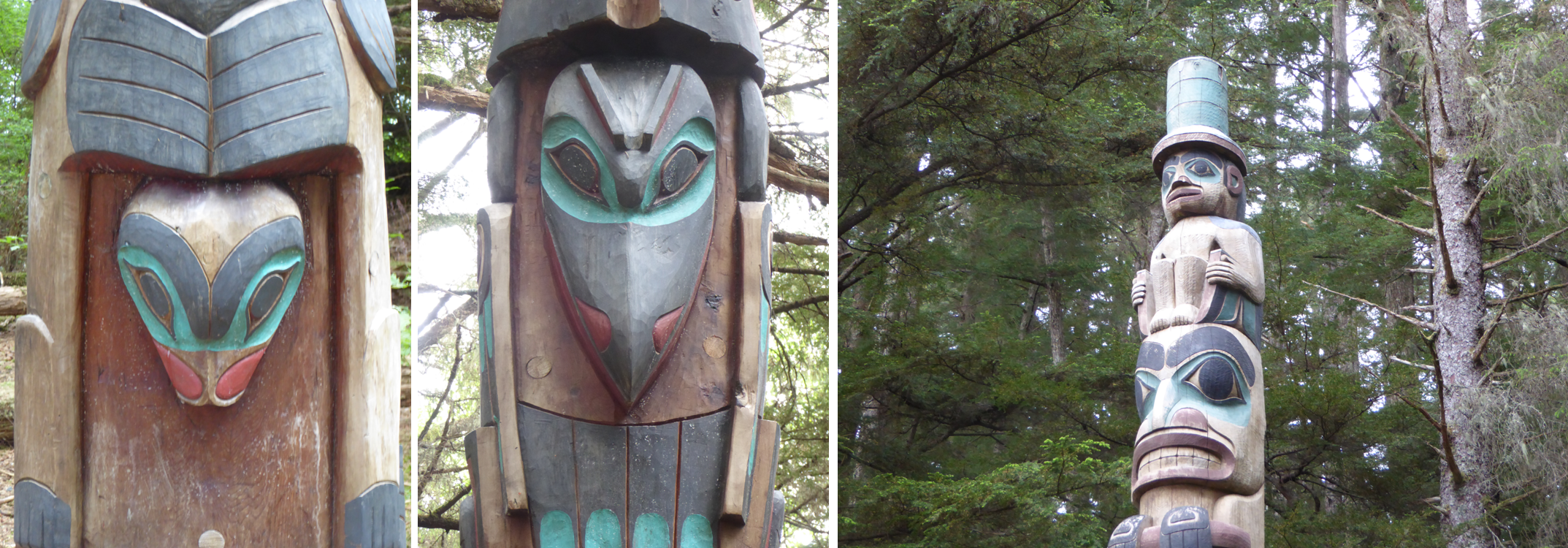
The totem images haunt my imagination. I envy America’s first nations’ closeness with nature, their intimacy with the seasons, the plants, the animals, their knowledge of the stars and the waters and the wind, their oneness with their surroundings. Modern cultures seem intent on isolating us from nature’s embrace, sheltering us from the natures’ moods and disassociating us from all that the natural world entails – both the challenges and the joys. This is not meant to be. Human nature is really one with nature. Our separation is felt deeply, whether we recognize it for such or not. Our souls grieve its loss, with that grief commonly being expressed in unhealthy ways.
Totums2

Those of us lucky enough to reside in places like Montana, where we continue to live close to the land with animals surrounding us, still have some tenuous threads to those ancient feelings, those ancient ways of knowing. Our daily lives reverberate with nature’s demands and glories. I give thanks for this way of live.

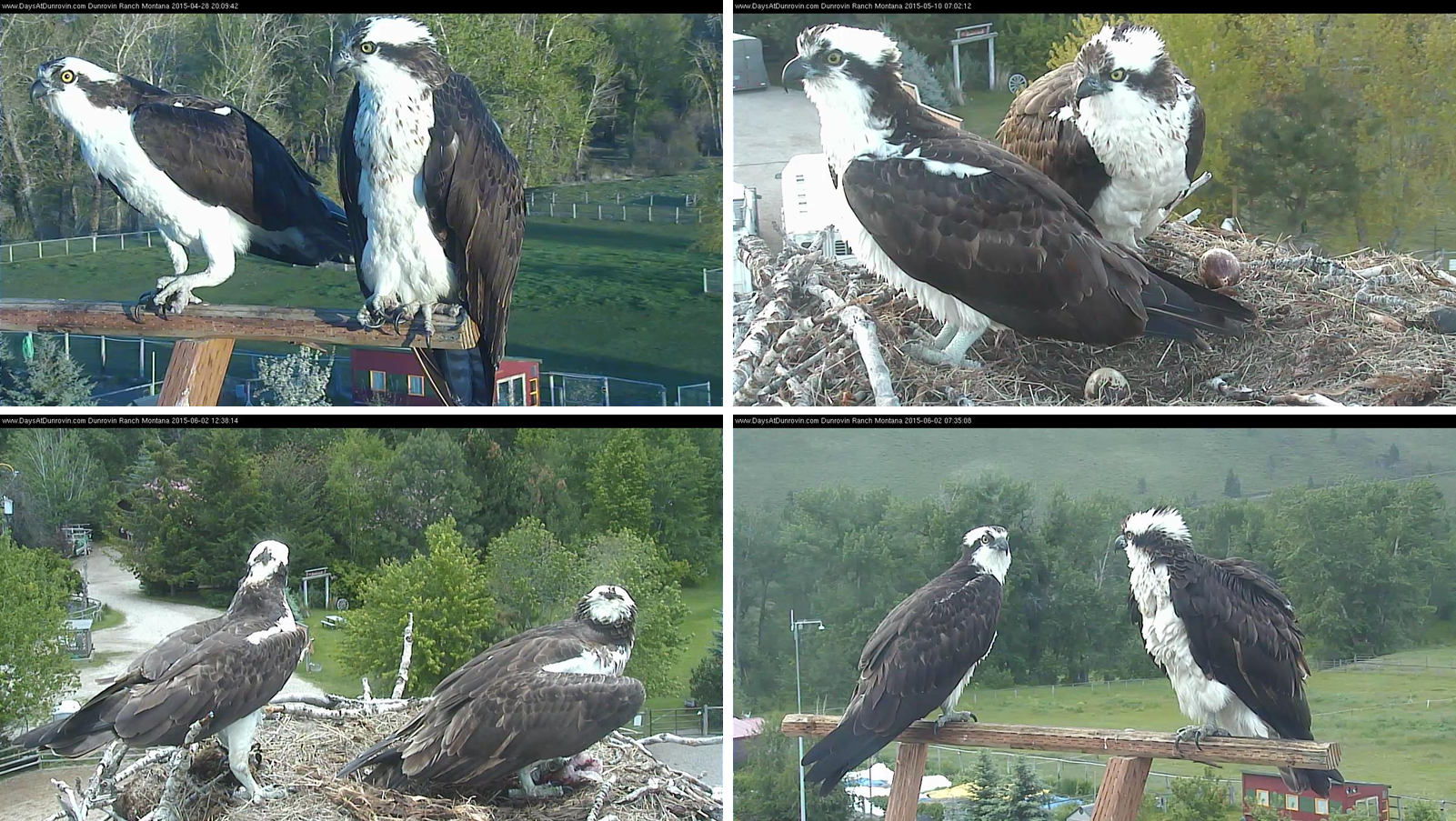
My mind plays with the prospect of a Dunrovin totem. To which animals would we pay homage? Clearly the ospreys would have to be included as their presence practically defines a Dunrovin summer season. Horses would most certainly be prominently featured as they are nearly our reason being who and what we are. Dogs have been our livelong companions and guides. Bears have been the focus of intense study by my husband and the source of endless hours of fascination and delight. Salmon and trout have lured us to river after river in both Montana and Alaska to seek their schools and grace our tables with sustenance. Yes, I think that Dunrovin would be the clan of the horse, dog, bear, trout/salmon, and osprey.

What animals would appear on YOUR totem? Why are those animals important to you?
 

Written by DunrovinSuzAnne · Categorized: About Dunrovin Ranch

May 29 2016

Midnight Camera Caress

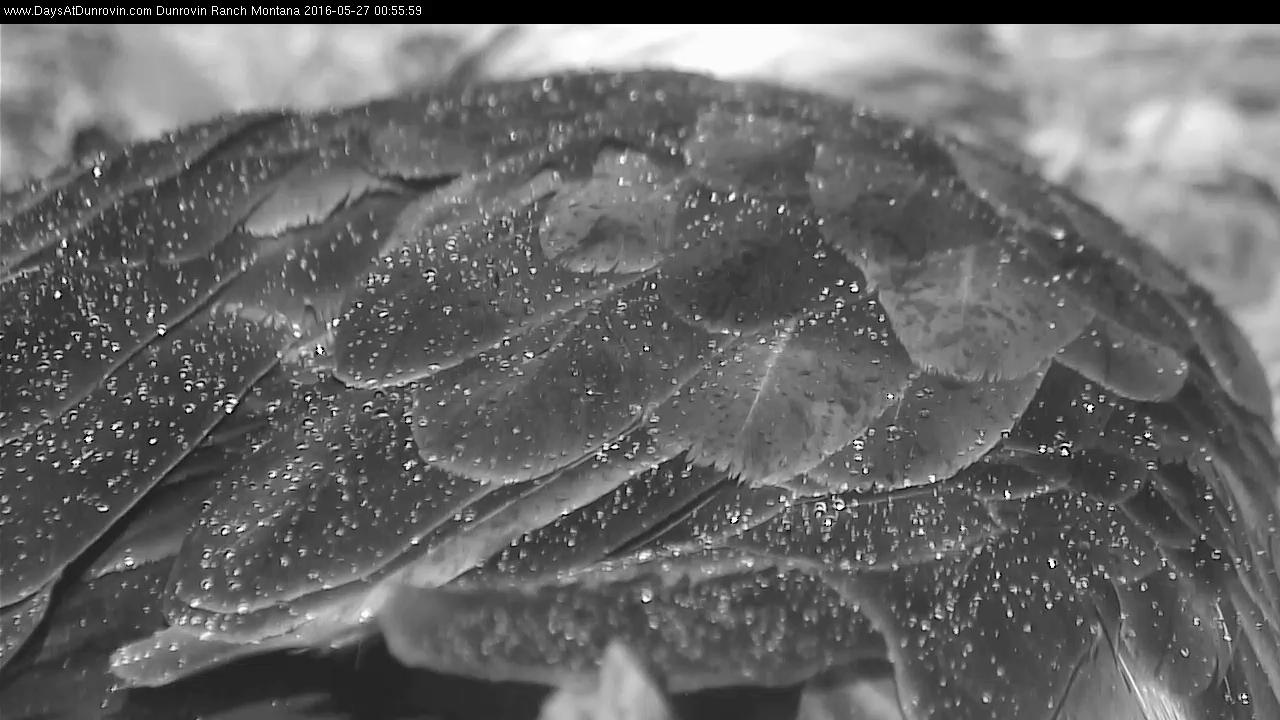
20160527_00-56-09A sleeping animal naturally invokes feelings of tenderness. We rarely see unknown or wild animals sleeping. Our house pets and pasture friends know us to be allies that would do them no harm, thus allowing us to this intimacy. But our mere presence stirs wild animals to alertness and prevents them from the total relaxation required to let their minds turn off and enter the other whelm that sleep induces.

Our web camera and infrared light give us a special glimpse into the world of the two beautiful ospreys that occupy the Dunrovin nest. It is a privilege to catch them at their most vulnerable, to stealthy watch as their chests and feathers silently rise and fall with each unhurried, rhythmic breath.

My own midnight stirring recently took me from by bed to casually check on Harriet with the camera. They she was with rain drops neatly formed on her feathers, totally at peace, keeping her two eggs snug and warm under her body as she slept. I could not help but wonder what images drifted through her mind and what strange osprey stories formed in her dream world. In many ways, her last few nights of incubating her eggs are much like the final days of a woman’s pregnancy. The calm before the storm of caring for young ensues. Does she know this? Does she await the events that are soon to take place? How can we think that she would not understand and anticipate the hatching of her eggs, the caring of her chicks, and the struggles that will soon engulf both her and Hal as they strive to feed and teach their young.

If I have learned anything from watching these ospreys so closely for the last five years, it is that the life of an osprey is no less complex, no less paradoxical, and no less a jumble of nature and nurture threads that would be impossible to unravel than is our own human existence. They are a marvel to be studied, and ultimately to be revered. They pull us into the fabric of our own primal selves and remind us from whence we came and who we are. Our sleep is not less rhythmic than theirs. We are no less vulnerable. We are no less vigilant in the presence of the unknown. We are made from the same organic molecules, seek the same necessities of life, and rejoice in the same accomplishments of raising our families. We are as one with the ospreys.

Written by DunrovinSuzAnne · Categorized: About Dunrovin Ranch

May 01 2016

The Magic of Mason Bees

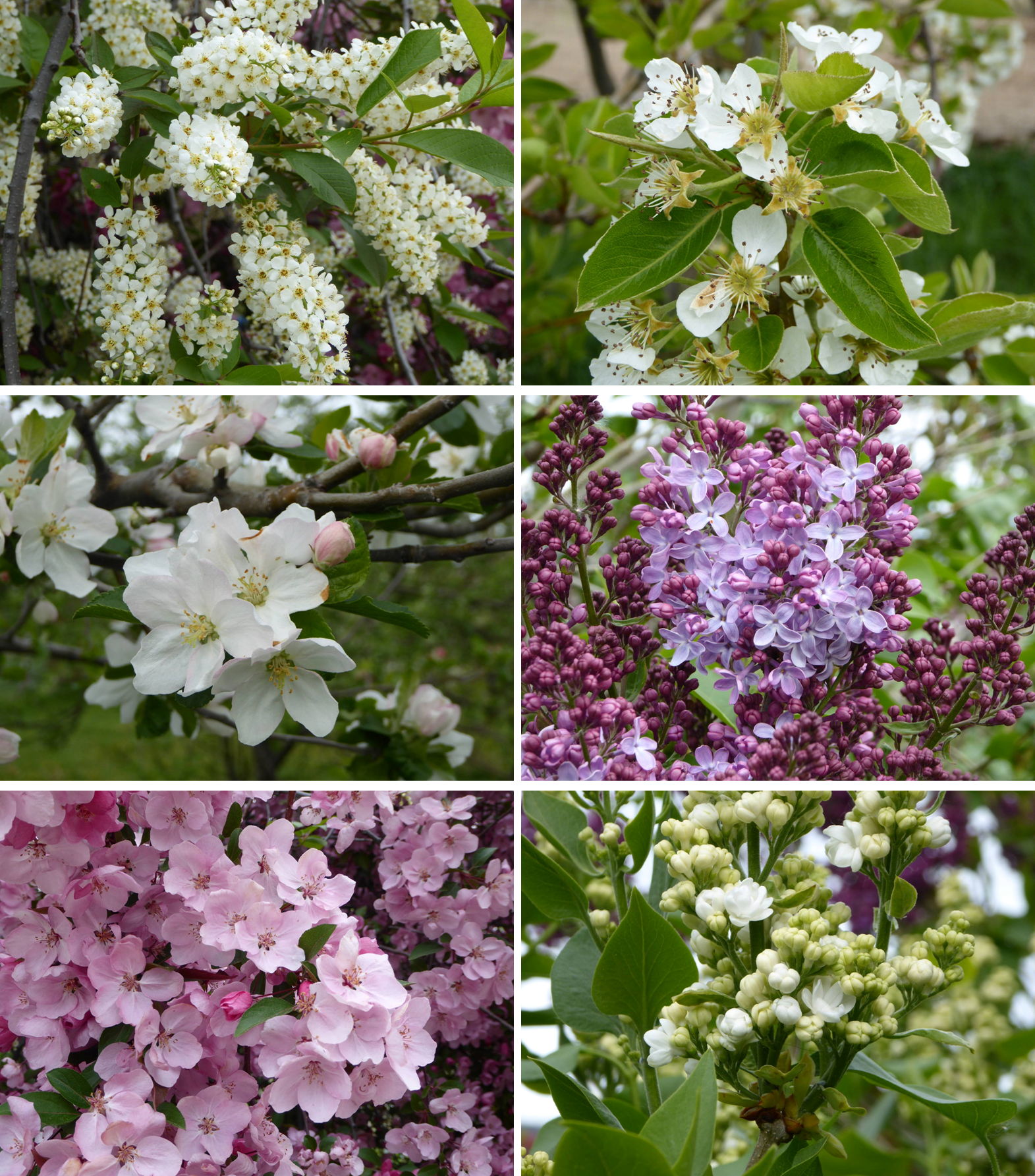
2016_Spring Blooms

Each year Montana Public Radio hosts a fund raising event to help finance their programs. They cajole their listeners into donating money to support their favorite radio shows and they offer what they call premiums for making donations at certain levels. These premiums are gifts that local listeners contribute and are, more often than not, eclectic, unique, homemade items that end up being loads for fun for all involved – the giver, the receiver, and fellow listeners. Odd sounding, off the wall, engaging premiums have become a signature of Montana Public Radio’s annual fundraising events and have served to make thousands of connections throughout the community.

Dunrovin Ranch has been both a giver and a receiver of these premiums. In fact, one of our loveliest assets came to us via a Montana Public Radio premium. When we first moved to Dunrovin, we had almost no experience with orchards and flowering trees. Upon making our first donation to Montana Public Radio, Sterling decided that he would select a premium that consisted of a scion from a listener’s apple tree that purportedly produced the most delicious apples imaginable to be grafted onto our own apple tree. Well, this sounded like a hoot. We had never imaged grafting one tree to another, and we we anxious to learn.

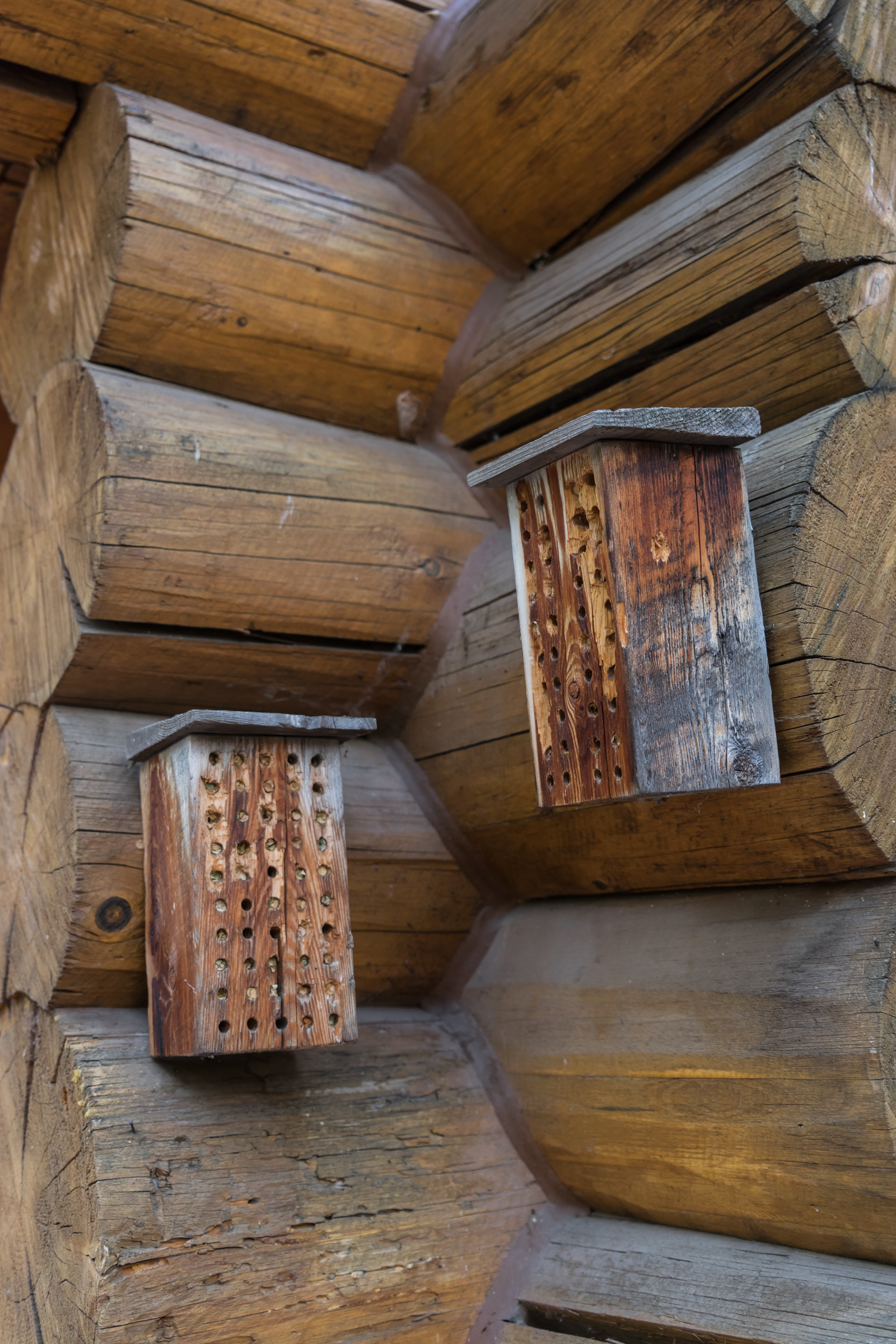
On the appointed day, a delightful gentleman arrived at Dunrovin with several scions in hand and set about to graft them to our tree while we watched and asked all sort of simple minded questions revealing our total ignorance of managing an orchard. He was most patient and most helpful. Not only did he complete his appointed task, but he asked us if we had cultivated any orchard mason bees. Well, of course not. We had never even heard of mason orchard bees, and we certainly had no idea of how to culture them. After listening to him extol their many virtues which included that they are native to Montana, very shy, do not live in hives, and do not sting, we were eager to lure them to our newly planted orchard. This meant simply installing a “bee box” with individual holes drilled, and supplying a source of moist clay for them to use to plug their individual nests.

DSC03918

This man was so generous and so committed to getting us get going, that he returned the next week with a couple of bee boxes that he had built. They were immediately installed on the side of our log home, and for two years, I faithfully maintained a pot with moist clay right under them to give the bees access to the mud essential for their homes. Sure enough, within several years, we had hordes of mason bees anxious to pollinate our ever growing number of both true fruit bearing and ornamental fruit trees. Happily, our orchard routinely produces an abundance of cherries, apples, pears, and plums each year. In addition, the scion that was grafted more than lived up to it billing. We routinely fight over who gets the apples from that part of the tree!

P1010134

Regrettably, I do not remember the name of this kind and very knowledgeable man who grafted the scion to our apple tree and who helped us so many years ago to get mason orchard bees established at Dunrovin. But I do remember his wonderful personality. And I remember his great Montana story which is not atypical of others who live here. When we asked him what he did, he immediately responded by saying, ” Well, I am a poet. That is what I am, but I can’t make a living as a poet. So, I make my living as a carpenter and I moved here to live amid the Montana mountains that inspire my poetry. Fruit trees are my passion.” Thank you, Montana Public Radio, for bringing this most remarkable man to Dunrovin.

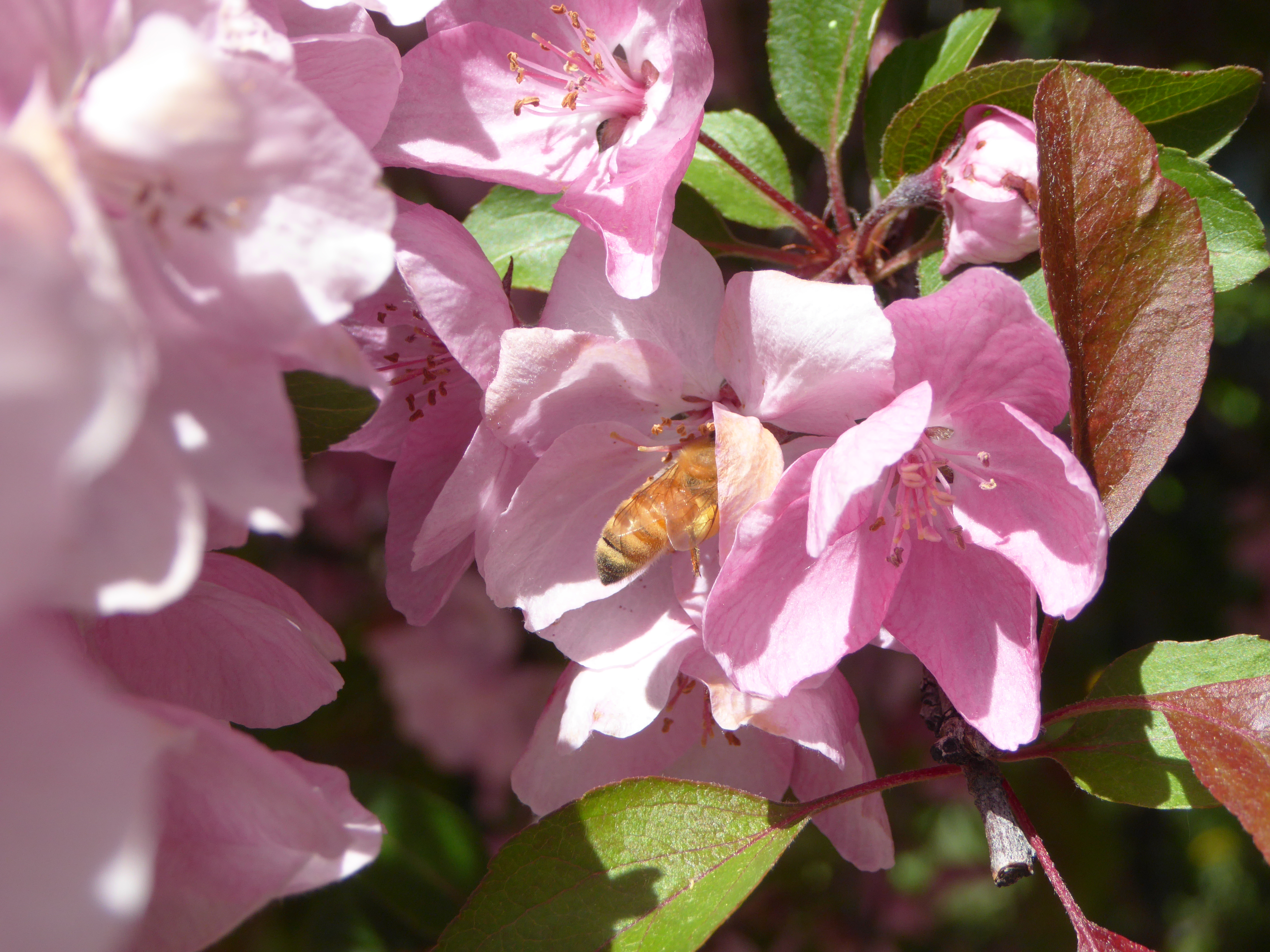
These many years later, our population of mason bees flourishes and bewitches all of our spring guests. As the flowering crab apple trees that surround our guest lodging bloom, the trees come alive with the sound of the thousands of mason bees busily visiting each and every bloom. Kids of all ages – from two to ninety – stand entranced beneath the trees and listen. They just listen to the overwhelming buzz knowing full well that they are in no danger from these friendly little insects. It’s pure magic! You can listen for yourself!


Written by DunrovinSuzAnne · Categorized: About Dunrovin Ranch

Apr 09 2016

Light on an April Morn

It has become my habit to carry my little Lumix “point and shoot” camera with me whenever I go for a walk-about or for a horseback ride. The camera sits in my vest front pocket until needed, yet it also secured around my neck with a soft lanyard to prevent me from dropping it as I struggle to keep my horse still or continue to throw Jewel’s ball while taking photos. Animals! They often entail multitasking.

April Morn My camera carrying habit has richly paid off. It has made me a much better observer and drawn me into taking notice of light and angles and distance and framing. I do not fancy myself a good photographer, nor do I really aspire to being one. I lack the patience to learn the technology and, frankly, my old body simply doesn’t want to put itself into the contortions required to position the camera just right to get the right shot at the right angle. Mostly I just enjoy the process on my own terms, satisfied with reasonable quality photos that reflect my view on the world.

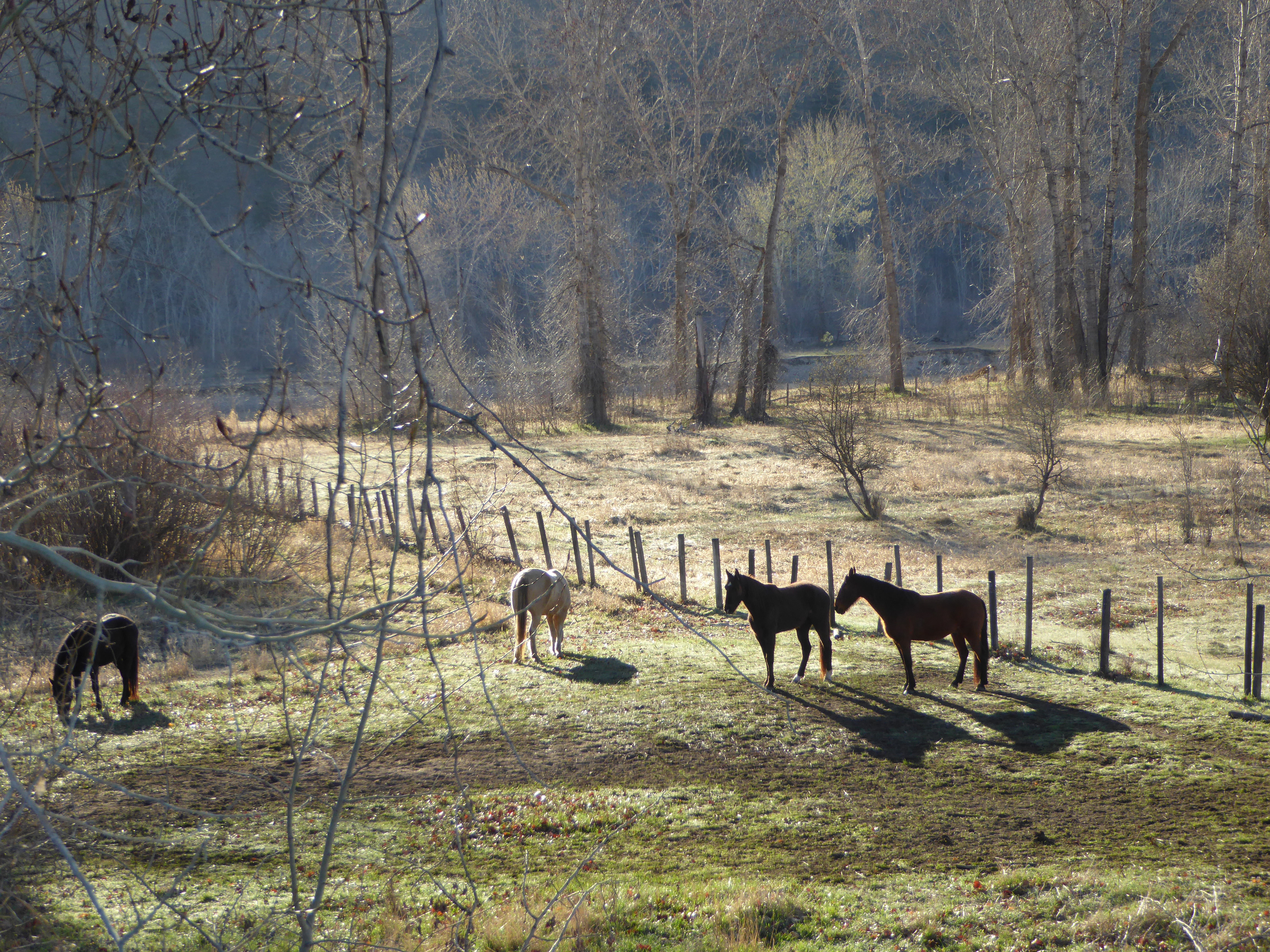
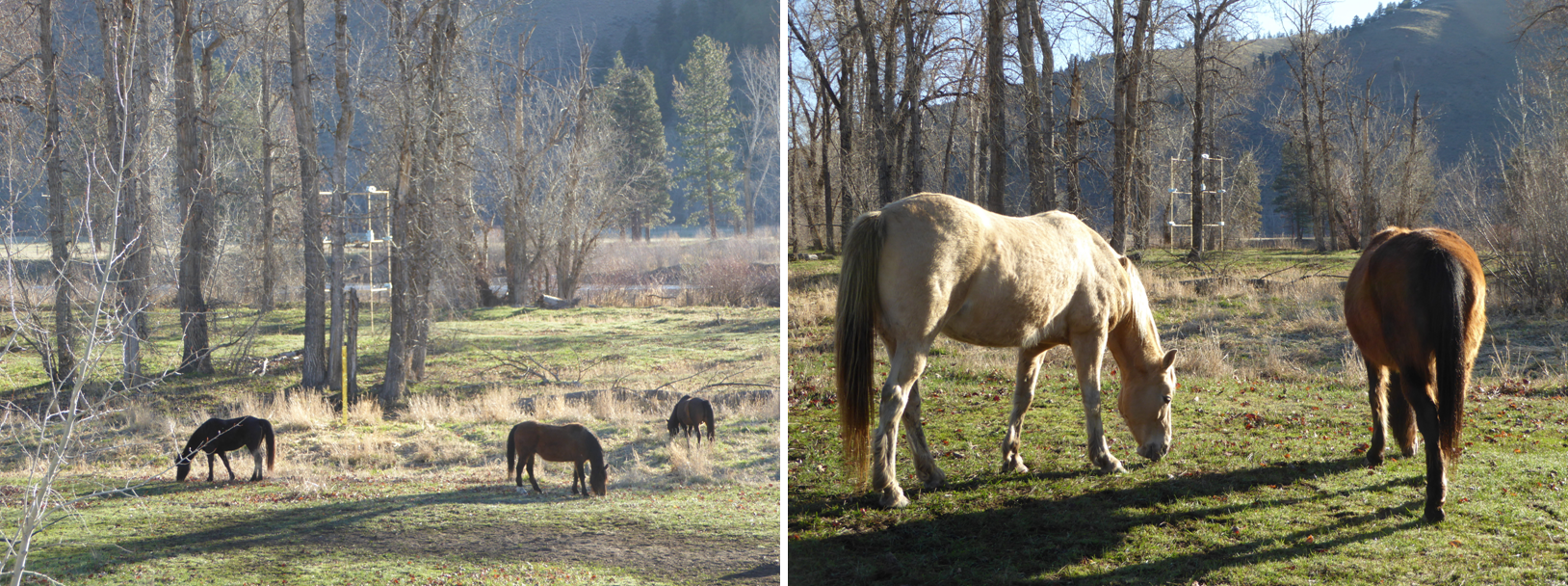
On a recent morning walk along our bench overlooking the riparian area next to the river, the mid morning light bathed the horses and beckoned me with my camera. Everything was so peaceful, quiet, and soft. Spring’s tender new shoots and just opening leaves on the trees cast an barely visible green filter over the view, rendering it a romantic scene from a British novel. It whispered, “take a moment, breath the clear air, pause for nothing but being still.”

Light on an April Morn

As I walked down the incline, I noticed Tyler’s art in the background, a exotic object without a hint of utilitarian purpose standing in the pasture, inviting comment and wonder. The horses expressed no opinion. They ignored it. It is not edible. It presents no danger. It can’t be used for scratching or shelter. It just is. But for me it adds another dimension, another frame to capture with my camera. It held me for several minutes, watching its inert stillness while the horse lazily grazed about it.

April Morn light

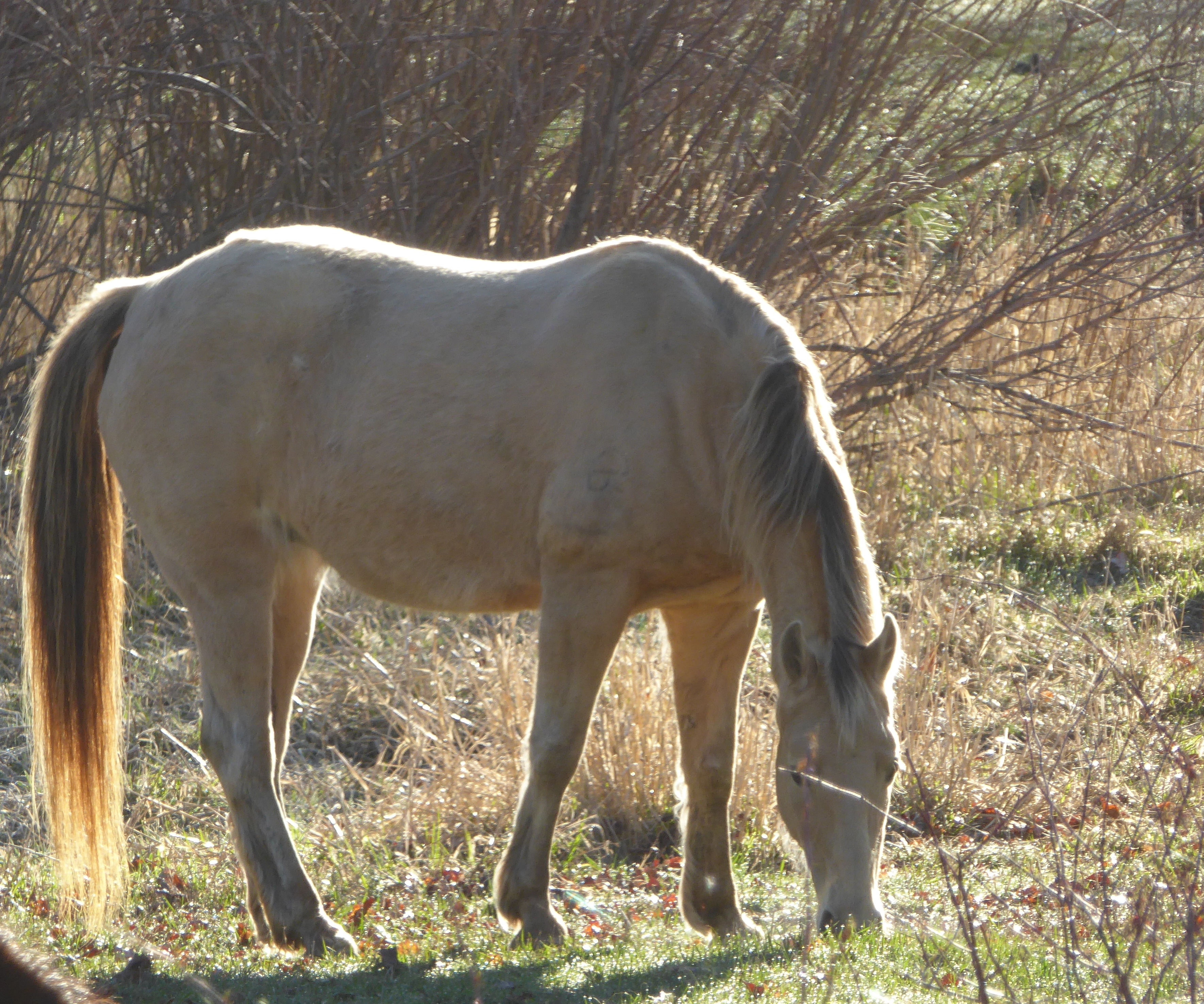
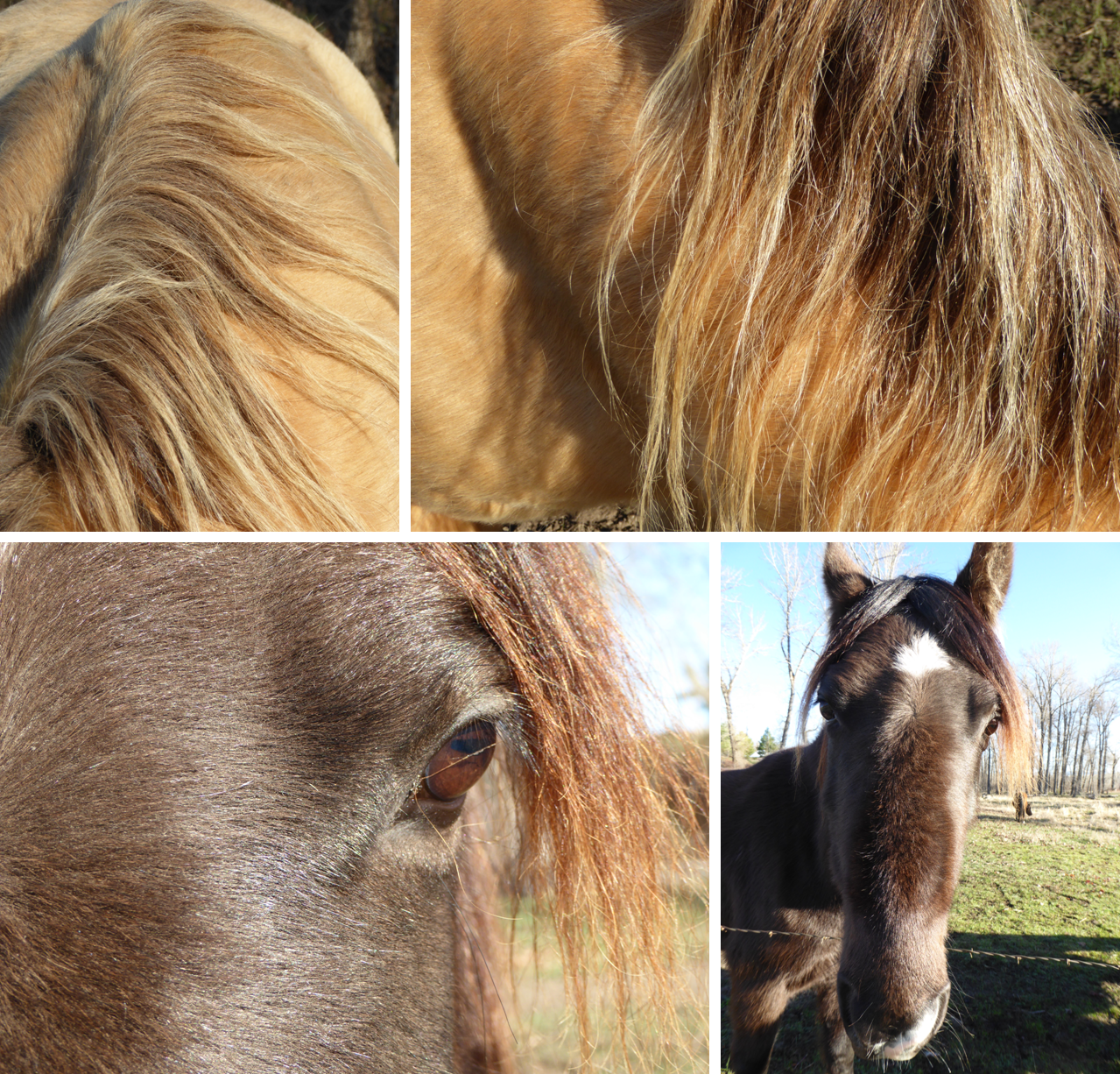
Drawing my eye back from the art work, it landed on my Lovely Lady Lonza, aglow with the back light sun, strong, and totally in her element, without care or worry. The champagne color of her early spring coat which has yet to discard all of its thick winter fur, played with the light. While separated by a fence, I kissed towards her and she came, allowing me to caress her with my camera to capture the richness of her mane. She stood for a few minutes, letting we adore her with my hands and my words; then she turned and went back in search sweet new grass.

April Morn lighting

Hearing my kisses, our newest horse, Mystery, with his gangly teen aged body came also. It surprised me. Arriving as a four year old directly off the large ranch of his birth, Mystery has been here only several months. He was unaccustomed to daily interactions with people which manifested itself in some shyness and an initial reluctance to come forward to meet people. I smiled at his progress. I spent several minutes scratching him and turning my lens in his direction to capture his face, his beautiful soft eye, and the light brown tips of his otherwise black mane. He was a mystery when he came – hence the name. He is now revealing himself to be a kindly, curious, and willing young fellow. What more will he bring to us?

AUTHORS NOTE: You will see Mystery standing in front of a barbed wire fence. We at Dunrovin Ranch do not use barbed wire for fences except where there are cattle on either side of the fence. Horses and barbed wire are not a good combination; yet cattle don’t respect anything except barbed wire or electric fences. Life! So full of compromises.

Written by DunrovinSuzAnne · Categorized: About Dunrovin Ranch

Mar 21 2016

The Eyes of March on the Ides of March

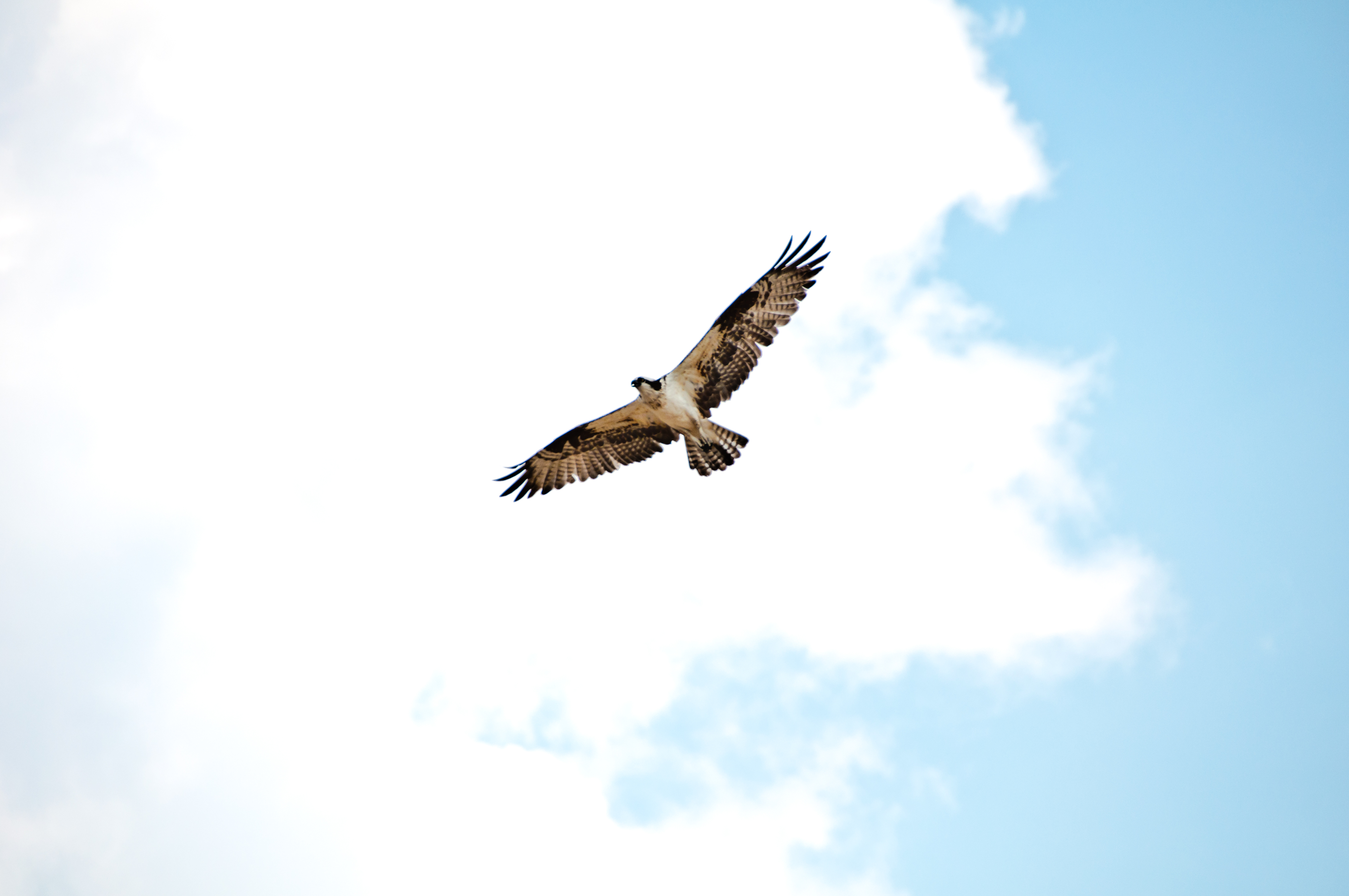
Each year as the calendar arrives at the ides of March, all eyes at Dunrovin begin to turn upward for the first appearance of our most famous seasonal residents – the ospreys. Since Dunrovin came into existence, the ospreys of spring and summer have been a dominant feature. They command the skies and they fill the air with their boisterous chirps as they set up housekeeping in their enormous nest. Each year they return in heed of nature’s call to breed, care for their chicks, and fledge the next generation of ospreys.

Eyes of March

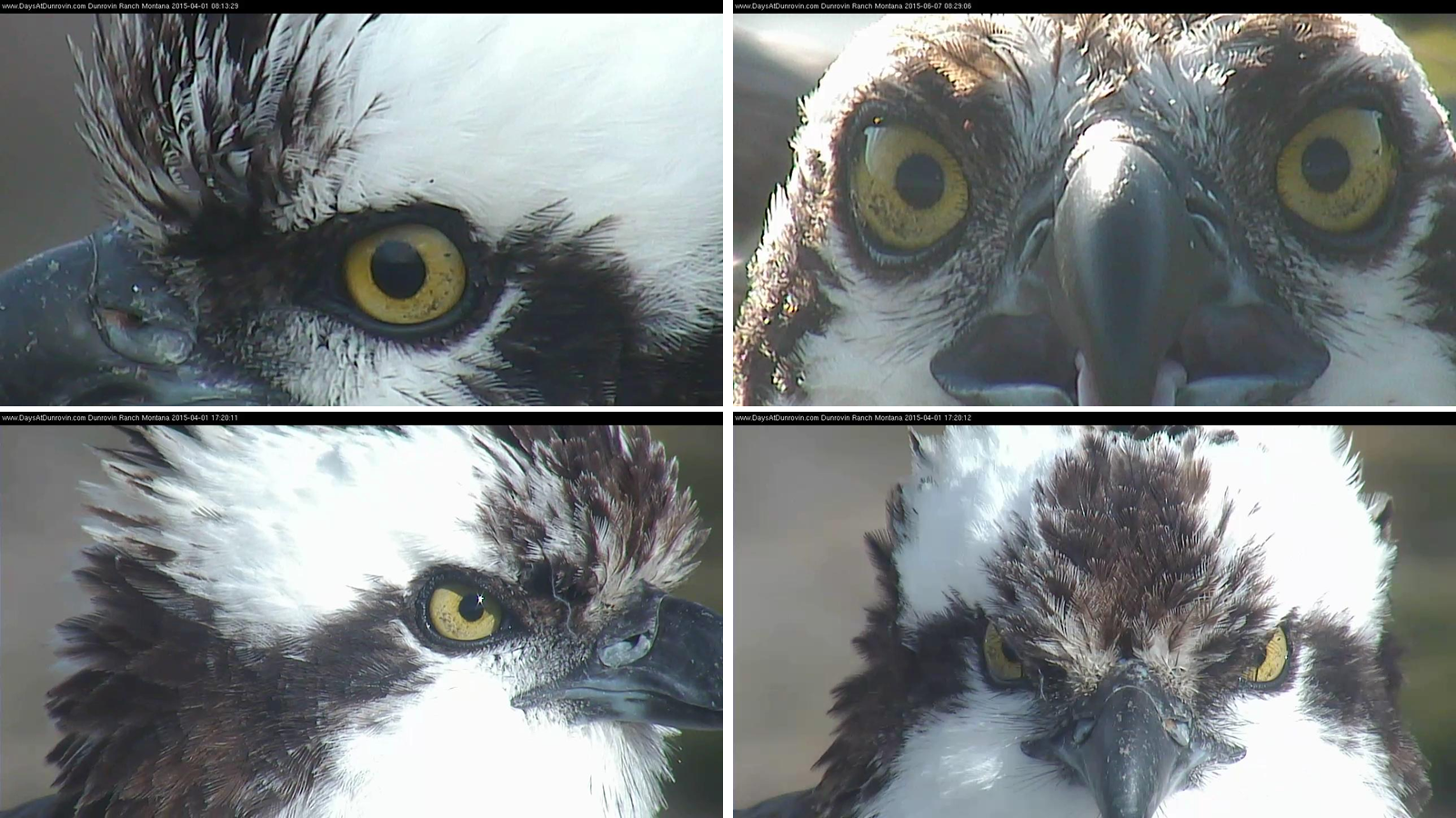
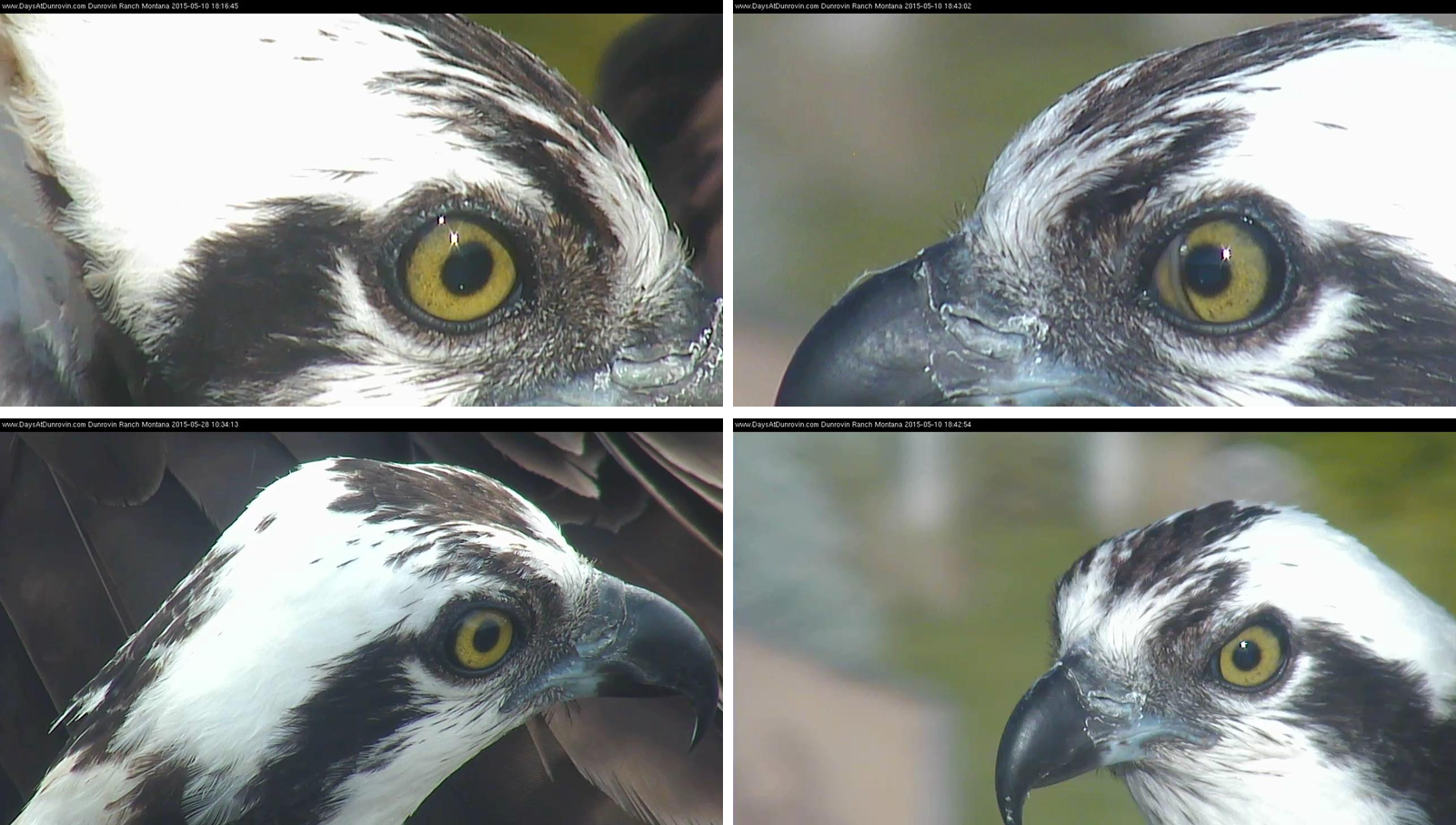
It was not until 2011 when Dunrovin installed the web camera above the ospreys’ nest that we were able to distinguish individual birds. From the ground, most ospreys look very similar. There is little variation in their color patterns and unless an osprey has a wonky feather or other distinguishing feature, it is nearly impossible to tell them apart as they fly by. The web camera, however, allows us to look them right in the eyes – and it is the eyes that are their telling characteristic. Each bird has a unique set of spots or flecks in the iris of each of their eyes. By comparing the fleck patterns from year to year, we can distinguish the birds and verify that the same ospreys return each year.

Indeed, since 2011, the same ospreys, whom we lovingly named Ozzie and Harriet, did return. Then, in 2014, tragedy struck. Ozzie was killed by an eagle, and Harriet was left along to raise her surviving chicks. She valiantly stayed long after her normal departure date and successfully fledged her two chicks. In 2015, Harriet returned alone and spent a chaotic and dramatic summer finding and training a new mate, whom we have appreciatively named Hal – short for Hallelujah, Harriet has found a mate!

While Harriet did manage to lay two eggs in 2015, she was unable to adequately incubate them for lack of a proper mate who would supply her with food. Hal arrived on the scene a little too late to be of much help. However, the infertile eggs did serve as great “practice eggs” for him to learn how to properly sit them. It was by all measures an unsuccessful breeding year – unless Hal returns with Harriet and last summer’s learning translates into an successful breeding this year. In spite of the lack of chicks, it was, for all of us viewers, a very interesting year. Little did we all understand just how much learning goes into successful breeding. Nature provided Hal with the tools; but is was Harriet who showed him how to use them.

So now our eyes will be focused on the eyes of any osprey that lands on the Dunrovin nest. It is a popular nest among ospreys, as there is no another one for miles around and the fishing grounds are good. It is sure to be occupied. But by whom? Will Harriet have survived the winter? Will she return to the nest? Will Hal return as her mate? Will they successfully breed and raise their first chicks together. The eyes of the ospreys that take up residence will answer our first questions, while only the passing of summer will reveal the answer to our latter.

Here are some close up photos of Harriet’s eyes. Notice the thick field of flecks in the lower, outside quadrant of each eye. In her left eye, she also has a rather large fleck at about 2 o’clock.

Harriet Eyes Collage

Now contrast Harriet’s eyes with Hal’s. His eyes have far fewer flecks. In fact, they are a only three significant flecks in his left eye and only two prominent flecks in his right eye.

Hal Eyes Collage

As soon as an osprey lands this year, which should be any day now, we will swing the web camera around to try to get a clear close up photo of its eyes. And, of course, our hopes are that we will ultimately see the same four eyes displayed in the photos above.

Harriet Collage

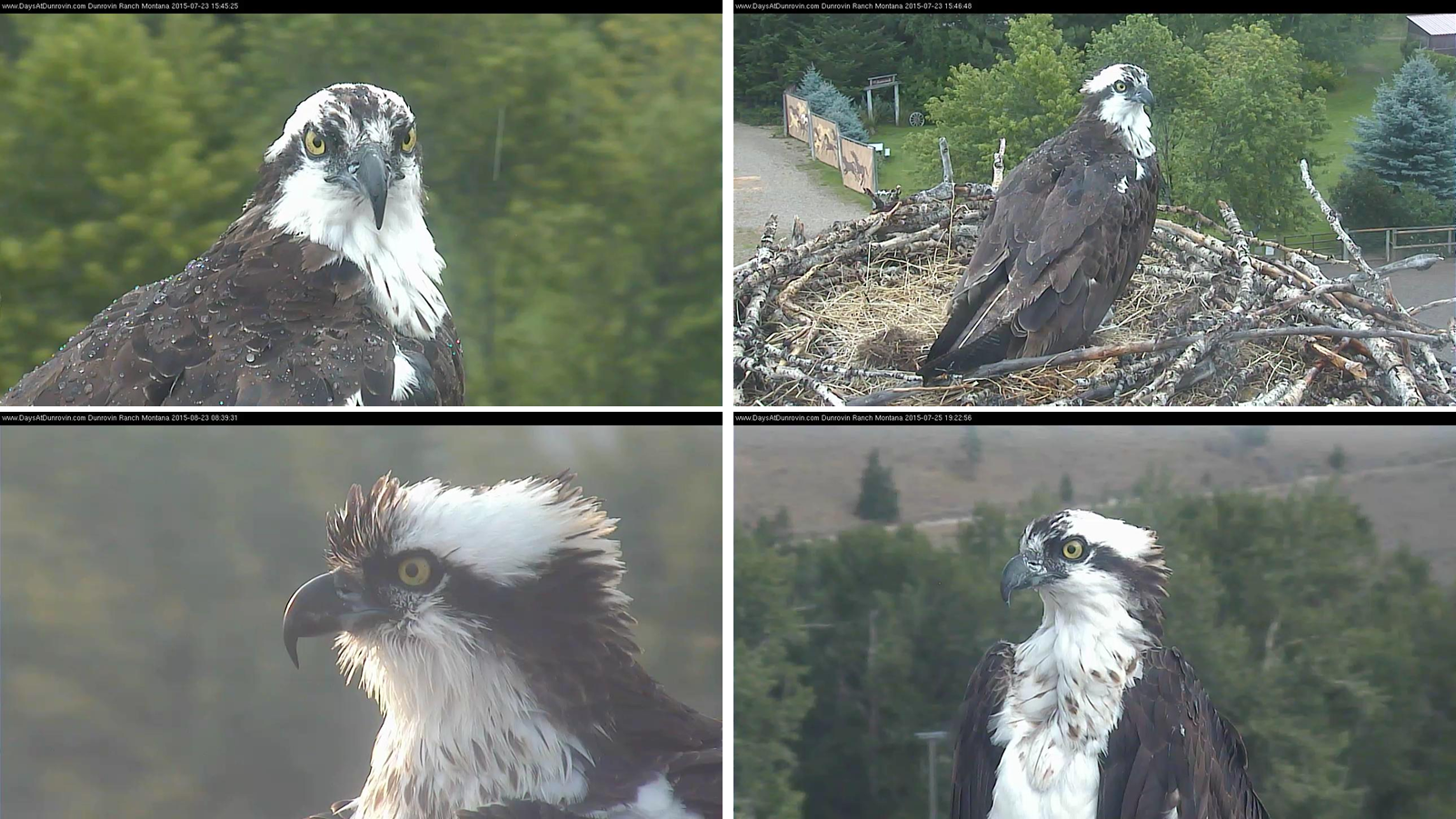
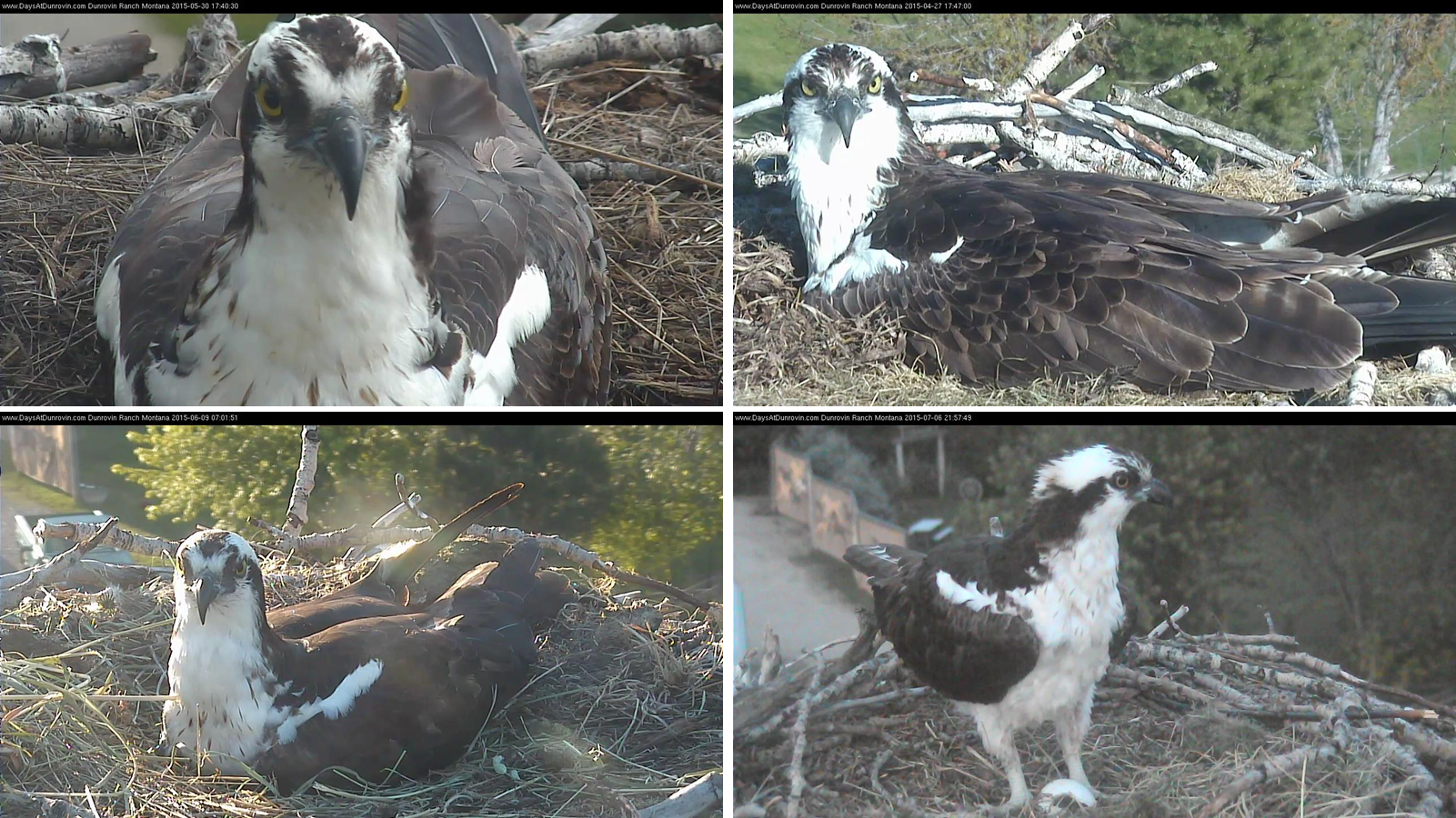
Naturally, there are other, less definitive, signs of each bird which can be used to tell Harriet and Hal apart. Harriet’s dark forehead feathers come down almost to her beak, while Hal has more white feathers immediately above his beak. Harriet is larger than Hal, as most females are larger than males.

Hal Collage

Harriet has a more distinct “necklace” of darker feather around her chest. Hal has longer and slimmer legs. Harriet, on the right in all of the photos below, has slightly more color variation in the feather on her back.

Harriet & Hal Collage

Here’s hoping that we soon greet these two magnificent birds back to Dunrovin for a successful year that produces chicks and keeps us in awe the entire summer.

Written by DunrovinSuzAnne · Categorized: About Dunrovin Ranch

  • « Previous Page
  • 1
  • 2
  • 3
  • 4
  • 5
  • …
  • 9
  • Next Page »
  • About
  • Activities
  • Contact/Payment
  • Webcam

© Copyright 2015 Privacy policy | Terms of Use | Brought to you by: Modern Entrepreneur